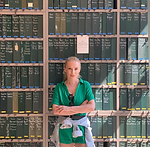

What should be in a Home?
Updated: Jan 5

Is the Question Itself a Space?
At first glance, the question “What should be in a Home?” may appear gentle, even poetic. Yet the moment it is posed, it begins to expose the inner architecture of both the individual and the public sphere. Because a home is never merely a physical shelter; it is a vessel of memory, belonging, safety, silence, and unspoken desires. To ask what should be in a home is, ultimately, to ask the individual: What do you need?
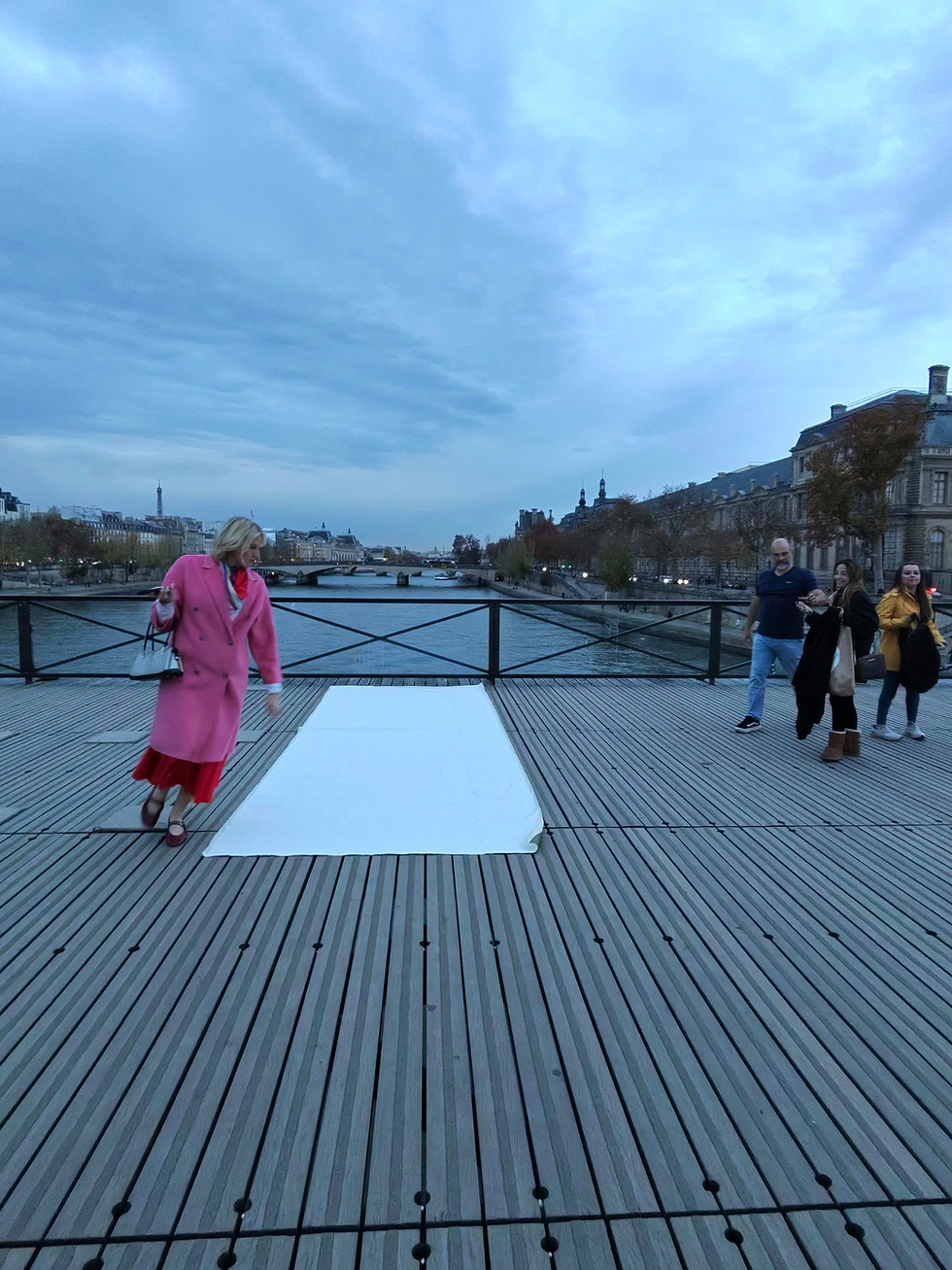
On October 14, 2025, on a bridge over the Seine in Paris, this question was placed into the flow of the city. The action deliberately resisted the conventions of performance. There was no theatrical gesture, no narrative guidance, no explicit invitation. Only a box, a few cards, and a single question. Precisely through this restraint, the work gained its strength. The artist did not occupy the center of the scene, but its threshold — present, attentive, observing.
The city continued to move. People walked, hurried, crossed the bridge. And yet, an invisible boundary emerged. Some stopped. Some turned their heads away. Some murmured, “That’s a difficult question.” One participant quietly said, “You could write a book from this.” Each response revealed a different layer of the question’s resonance.
This work consciously renounces the answer. Its intention is not to produce meaning, but to make visible the moment of confrontation with meaning. Participants are not captured by what they write, but by what happens just before writing — the hesitation, the pause, the internal negotiation. The reflex to think, to withdraw, to remain silent unfolds simultaneously.
Here, the home operates as a metaphorical structure. It may become the body, the nation, memory, childhood, or even art itself. Each participant, often unknowingly, projects their own inner space onto the question. Single words, fragmented phrases, or blank cards function as traces of this projection.
What should be in a Home? is constructed around invisible thresholds — much like a doorway. Some cross it, some linger, some turn back. No one is compelled. No one is instructed. Yet no one remains untouched by the presence of the question. In this sense, the work reveals perception itself rather than directing it. It is quiet, but incisive. Minimal, yet enduring.
This action stands as one of the most distilled and courageous expressions of the artist’s long-term inquiry into space, thresholds, and perception within the public realm. Here, art shifts away from object-making toward the creation of a condition. The artist opens a mental void and then withdraws, allowing the participant to inhabit it alone.
The work collects not answers, but faces. It registers pauses. It includes those who walk past as much as those who stop. Because sometimes the true impact of a question emerges precisely in the moment it remains unanswered.
What should be in a Home?Perhaps it requires only this:the courage to pause — and think.
Comments